operate.
we run the department for you: your channels, our team and agents, humans directing and approving every piece before it goes out.
you own: the work · files, rights
a turbo arrives on a pallet with no paperwork and a phone number. nine stages later it leaves with a warranty, an invoice, and a customer who already knew it was ready. everything in between is the system we built.
a turbocharger arrives on a pallet. no vehicle, no owner present, no paperwork. a number stamped on the housing, a phone number on the box.
four questions follow it around the shop: where is it, what does it need, what does it cost, who do we call. those answers lived on a whiteboard, in a notebook, and in the owner’s head.
a shop run that way does not fail loudly. it leaks. a unit waits because the one person who knew is off today. the same customer phones three times. a job is collected before anyone writes the invoice. none of it is a crisis, and the owner is the only one who can see it.
NOTHING LEAVES THE SHOP WITHOUT PAPERS · JAN 2026
fig. 01 · one turbo, from the pallet to the customer
an operating system for the whole shop, not a tool bolted to one corner of it. the job board and its nine stages. a bench kiosk the floor signs into with a PIN. the client book. turbo and parts stock, with purchasing, batch ordering, and loan units tracked out and back. six document types. customer messaging. a public status page. an audit trail under all of it and nightly backups under that.
we started at the bench, not at a spec, and kept the words the floor already used: intake, washing, inspection, machining, assembly, balancing, test, ready. nine stages, in an order nobody had written down because everybody knew it. the screens here are translated. the real thing speaks the shop’s own language, which is why it needed almost no training.
EVERY LANE WRITES TO THE SAME JOB RECORD
fig. 02 · what we built, and who touches it
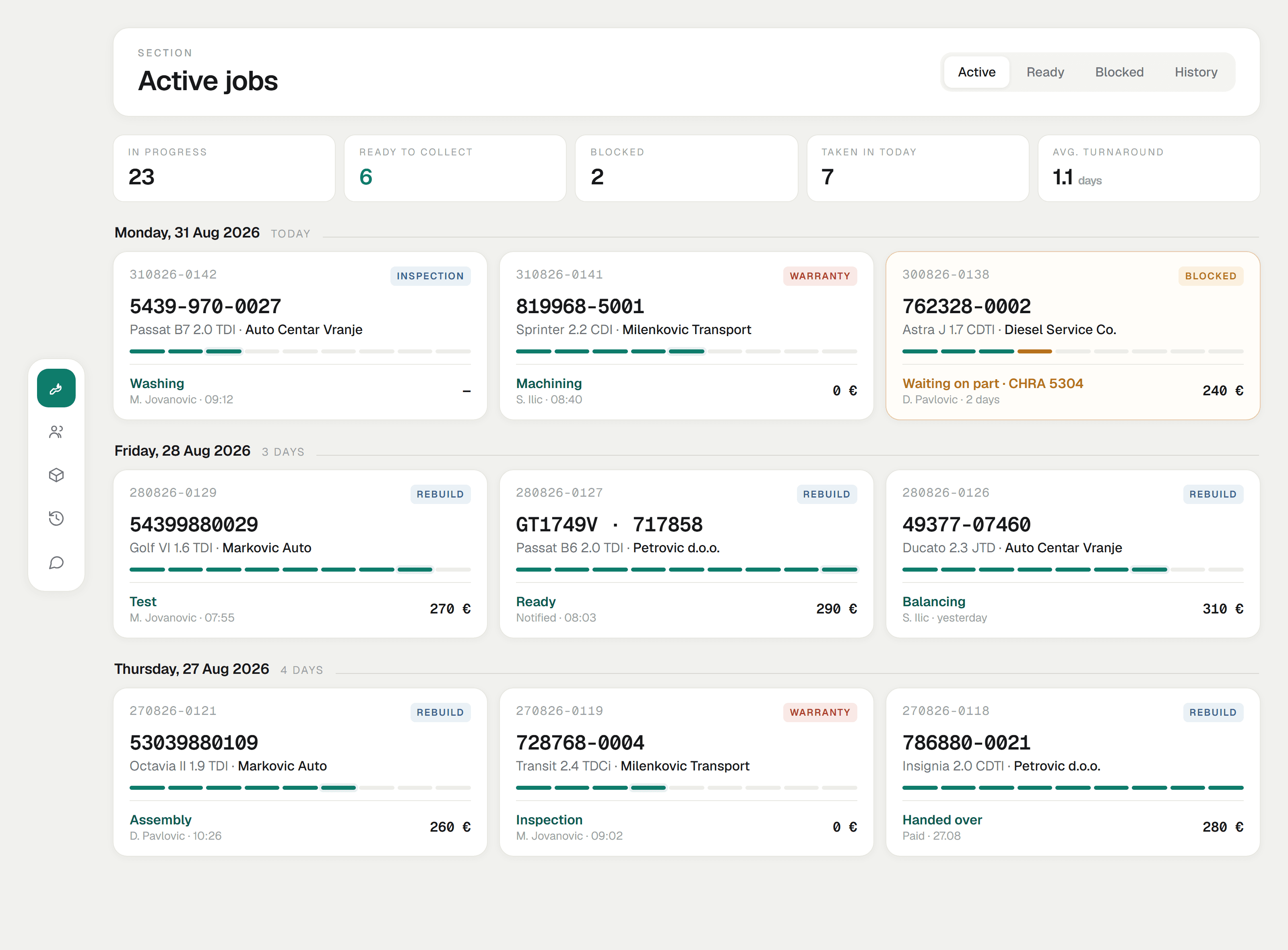
every unit is a card, grouped by the day it arrived, carrying the number, the vehicle, the client, the stage, and the price. one screen answers the question the whole shop keeps asking.
a mechanic moves a job in two taps at a bench terminal. each action writes a line: which stage, which operator, what minute. rework is recorded, not hidden. a job waiting on a part turns amber and says why from across the room.
all nine of the shop’s operators log through it. that is the number that matters, because a tracking system half the floor ignores is worse than no system at all.
the board · every unit in the shop, grouped by the day it arrived
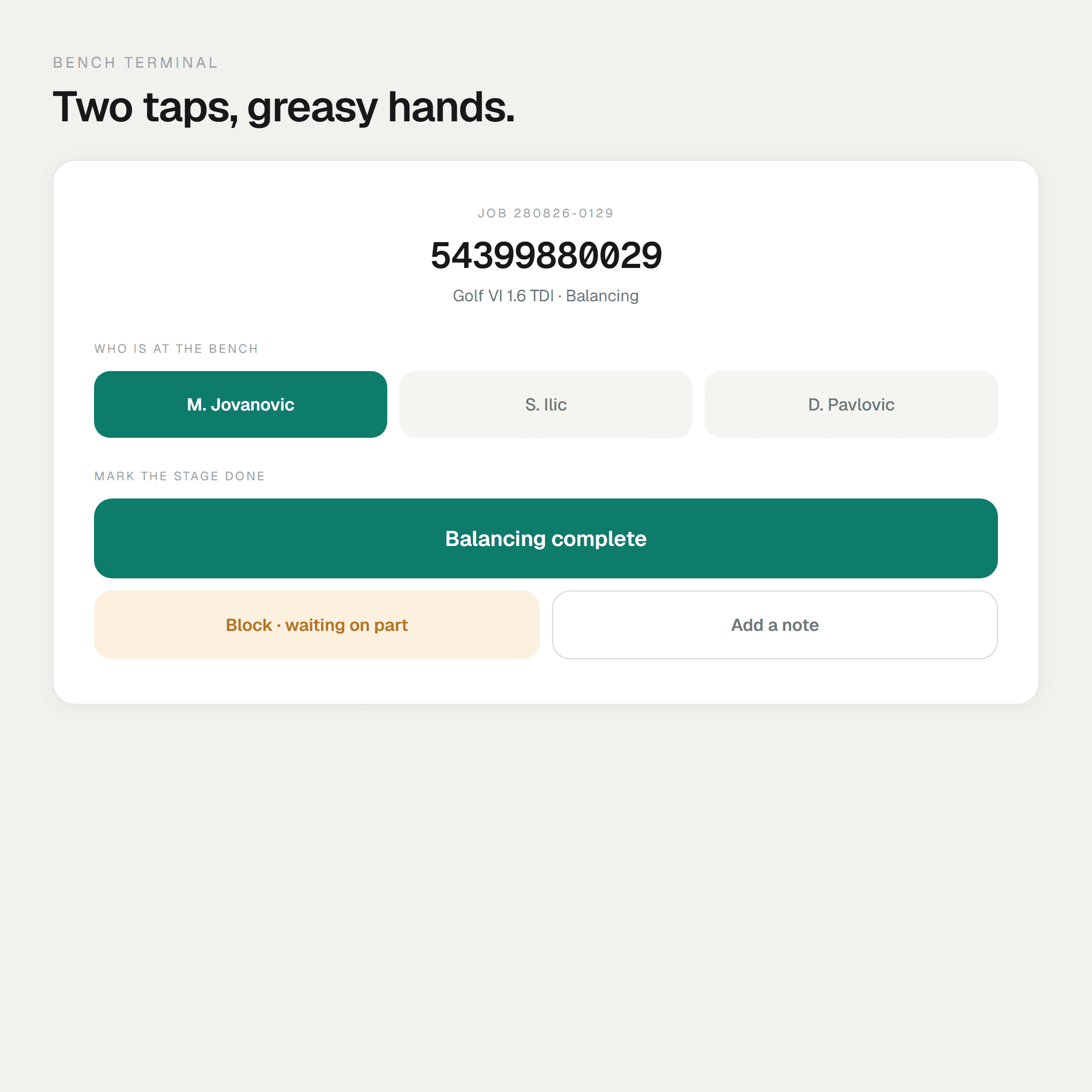
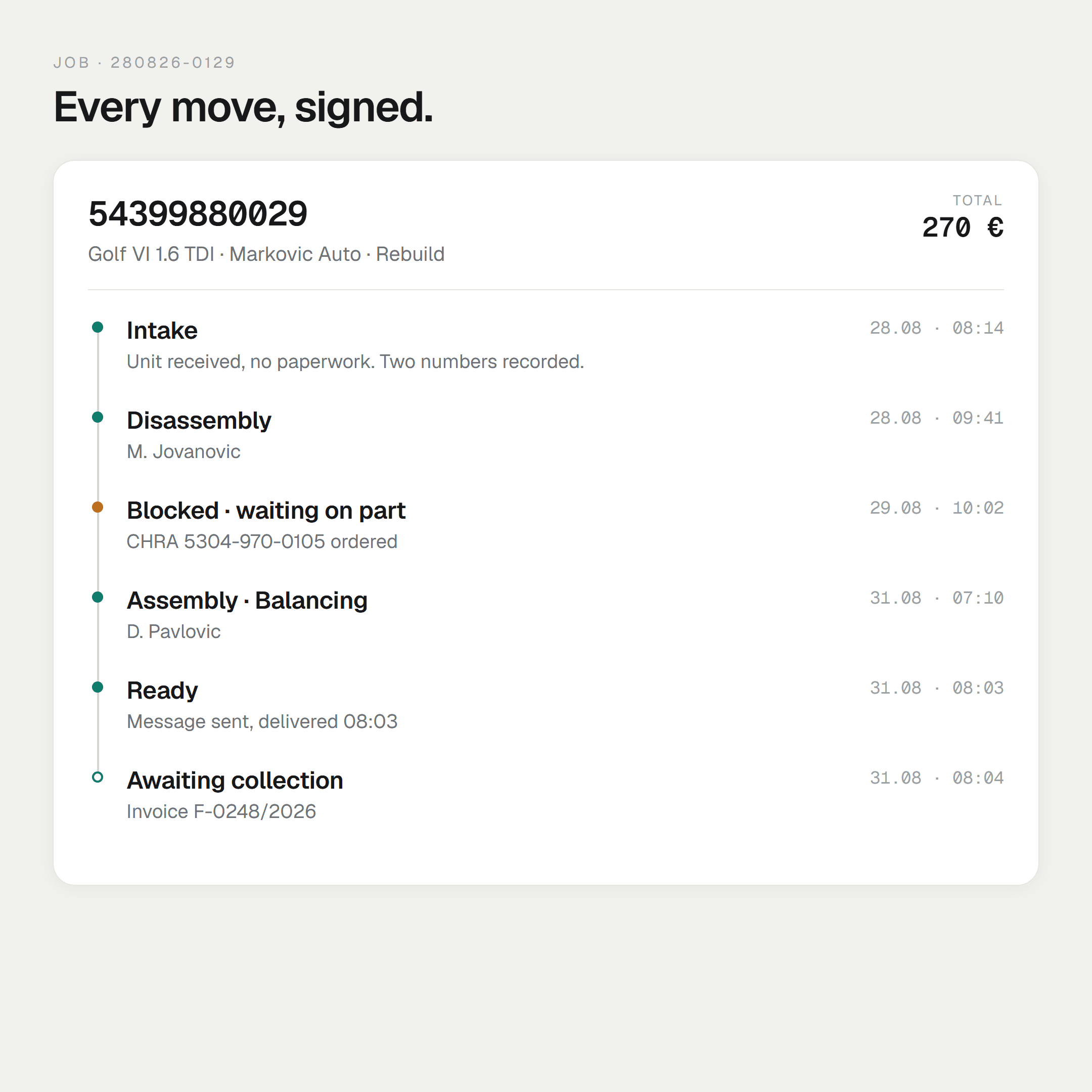
the kiosk the floor taps · the record it leaves behind
a turbo shop is an inventory business in a workshop’s clothes. cartridges, actuators, gasket sets, housings, each carrying competing supplier numbers for the same physical thing. margin is made or lost on knowing what is on the shelf.
a part is bought, lands on a numbered shelf, and is consumed against a named repair. orders go to suppliers in batches. units loaned out while a customer waits are tracked and chased back. 2,472 part records, 2,427 logged movements, every one tied to a job.
and because consumption is always tied to a repair, the system learns which parts fit which turbo numbers by itself. 1,975 fitments so far, none of them typed in by hand. that catalogue is the most valuable thing in the database, and nobody set out to build it.
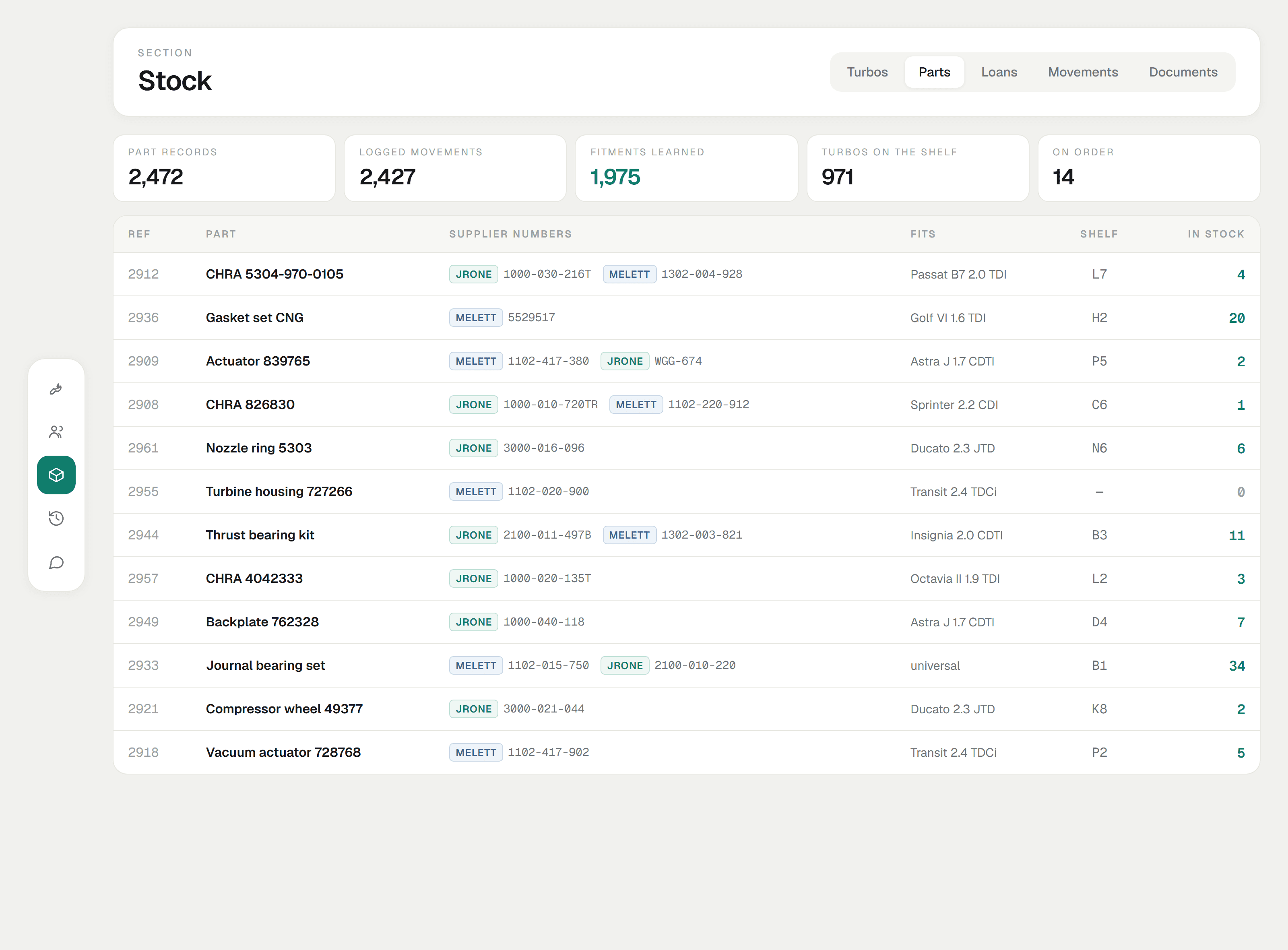
the shelf · two suppliers, one physical part, one record
the question that ate the most hours was the cheapest one to answer: is it ready. so the shop stopped waiting to be asked.
a message goes to the customer’s phone when a unit arrives and again when it is ready, threaded to the client so a reply lands on the job instead of in someone’s personal inbox. every unit also carries a printed label. scanning it opens one page showing the stage and nothing else: no prices, no notes, no other customer’s work.
it turned a cost into a channel. the shop now reaches its customers directly, on the phone in their pocket, without buying the attention. 76% of the work now comes from customers who have been before, and one has sent 109 units through the door.
THE STATUS PAGE ANSWERS IT INSTEAD OF THE SHOP
fig. 03 · the question that used to cost the most, answered without anyone picking up
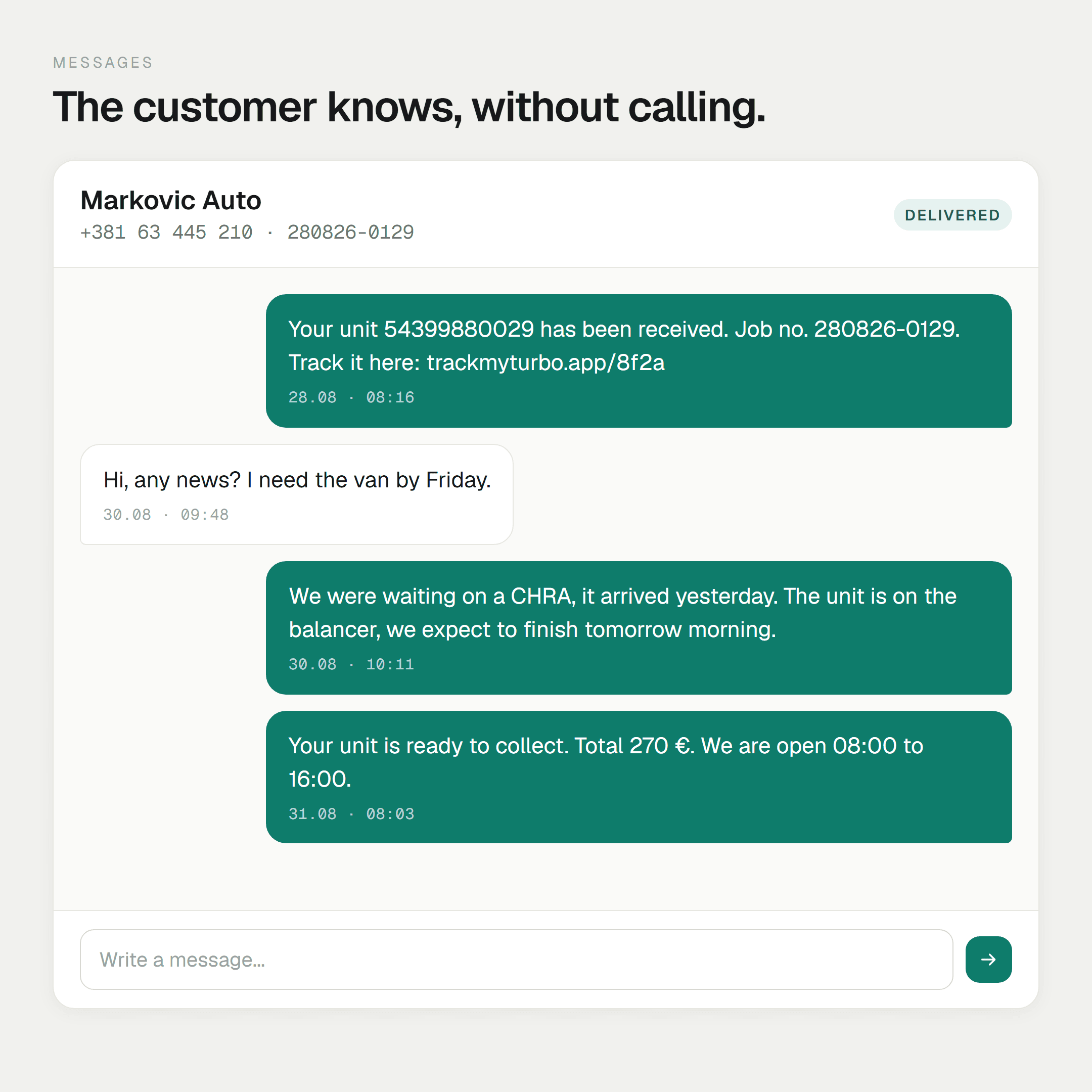
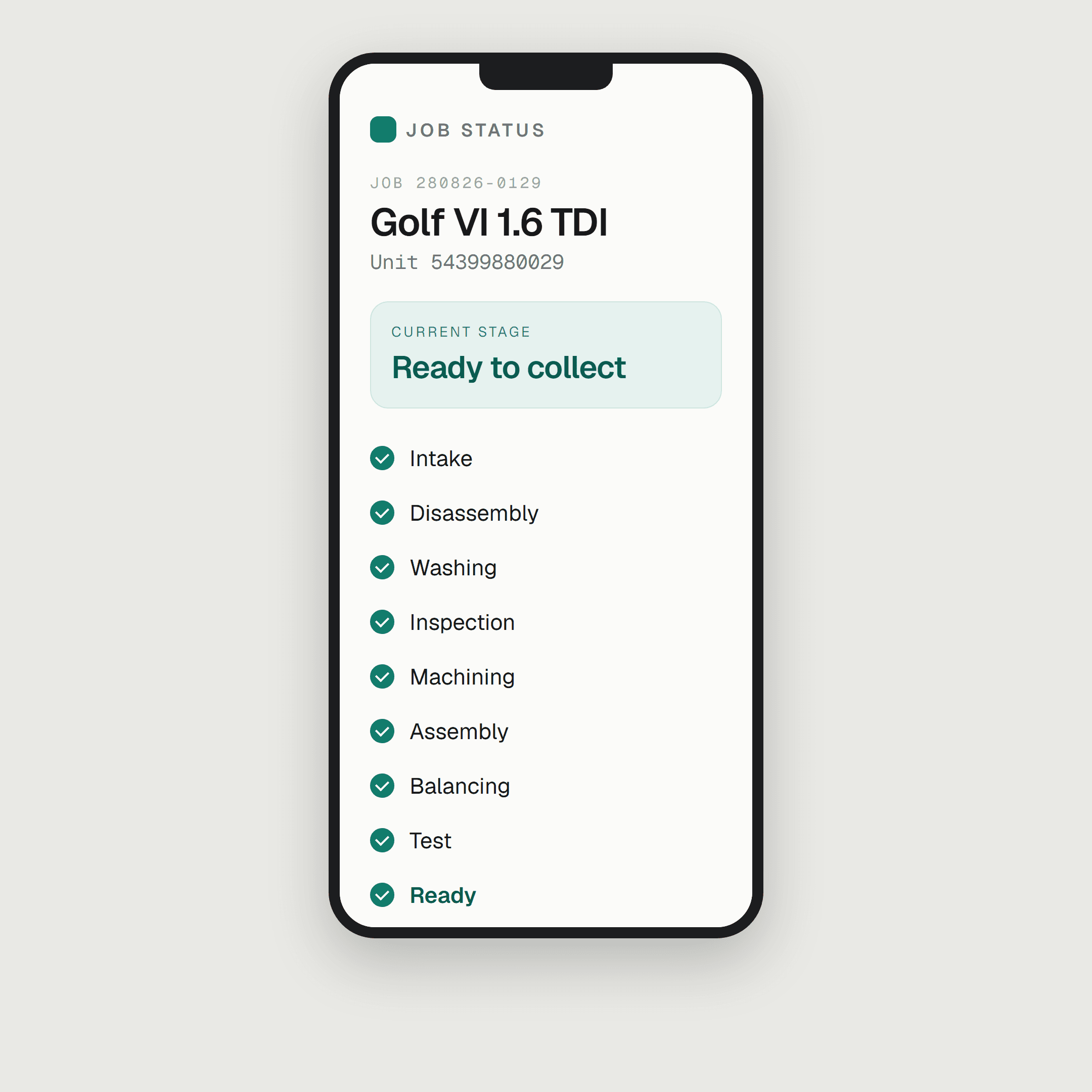
the thread on their phone · the page behind the label
six document types come out of the job: service sheet, invoice, cash receipt, delivery note, quote, warranty certificate. each numbered in sequence the moment it is issued, carrying the shop’s details and a code linking the paper back to the repair. a number that skips or repeats becomes somebody else’s problem months later, in an office, with penalties attached.
the description on the service sheet is written by an AI reading the job’s own log trail, so the customer gets a plain account of what happened to their turbo instead of a line item. it is fed the stages and the dates and nothing else. operator names and internal notes were deliberately cut out of that prompt after they surfaced on a document headed for a customer.
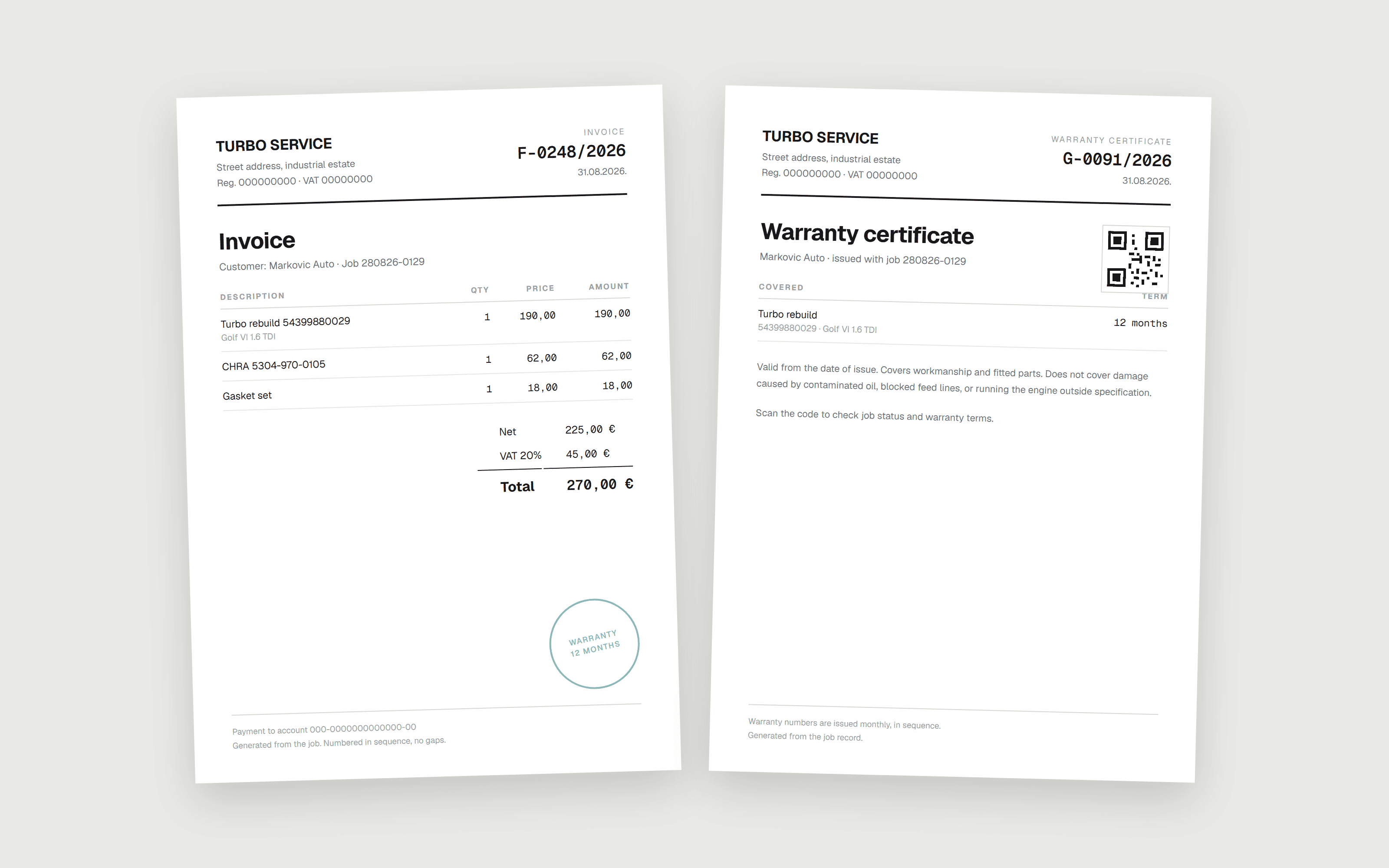
issued from the job · numbered in sequence, never by hand
hire for it, and wait.
software this specific normally means a salary line, a spec document nobody reads twice, and two quarters before anything runs on the floor. most shops never start.
one operator, directing agents.
the process came out of the owner's head in conversation. agents wrote against it, one person directed, corrected, and approved every change, and the floor used it while it was still being built.
the shop was using it before it was finished.
measured against the live database on 31 august 2026, over the last 90 days of trading. there is no before: the shop kept no records a system could read, so none of this is an improvement claim. it is what the business runs at now. no revenue figures, at the client's request.
there is no before. the shop kept no records a system could read, so nothing here is an improvement claim. these are the numbers the business runs at now.
and this is one shop’s system, not a product. the stages, the documents and the suppliers belong to that shop. we looked hard at selling it to every turbo shop in europe and decided against it, which is a different story than this one.
the method points at any operation where the process is real, repeated, and currently held in somebody’s head. the trade changes. the shape of the work does not.
from this build to yours
the same agent system that built this one reads your business and reports which parts of it still run on somebody's memory. the opportunities, named.
we run the department for you: your channels, our team and agents, humans directing and approving every piece before it goes out.
you own: the work · files, rights
we wire the system into your company, train your team, and hand you the keys. agents, prompts, gates, infrastructure: yours.
you own: the system · agents, prompts, training data, infrastructure